)
)
)
Curate Your Condiment & Spice Packaging With Smart Label Solutions
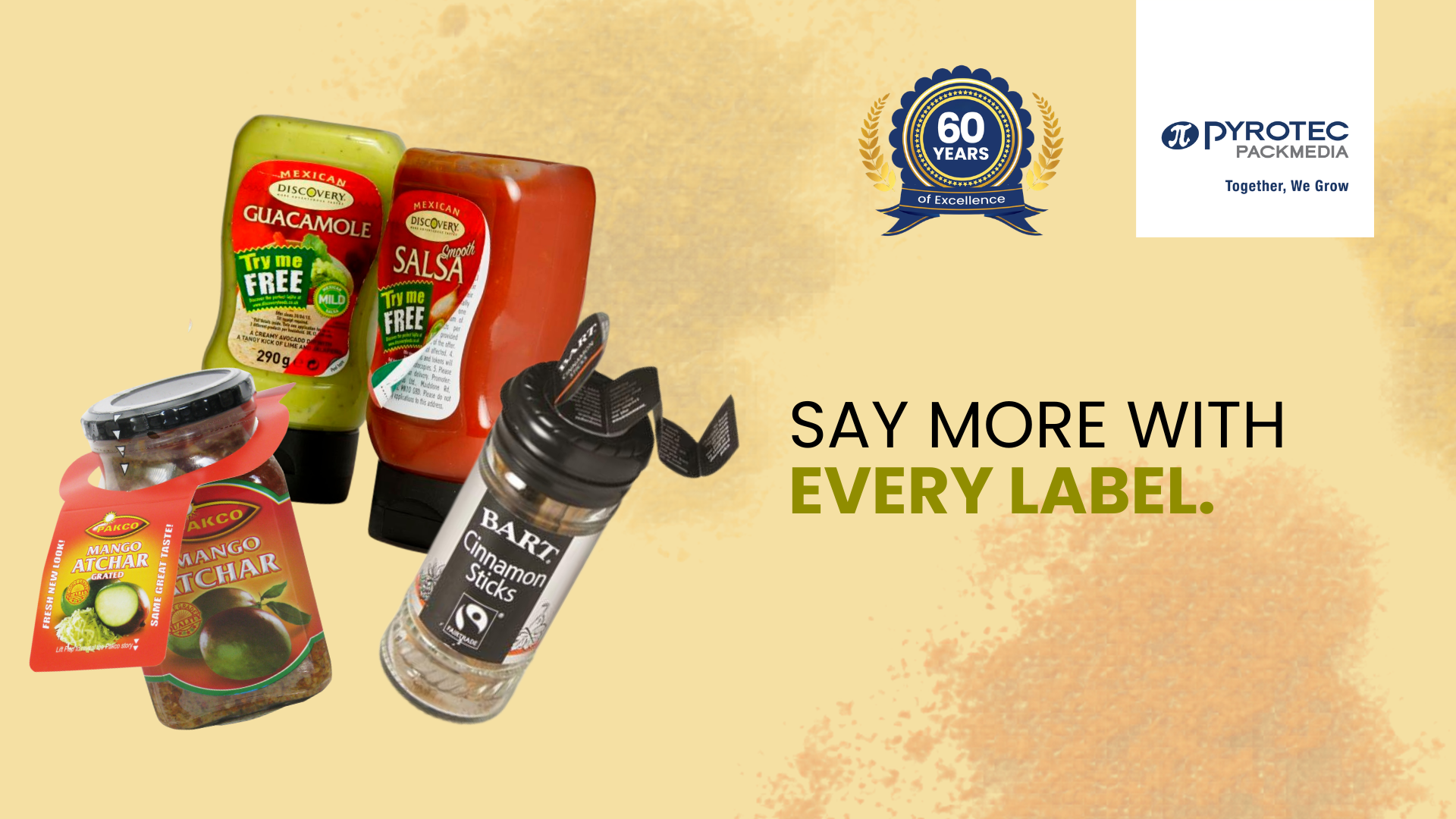
But condiment and spice brands don’t have the luxury of endless packaging space. An artisan rub sauce bottle or braai spices has limited real estate, yet still needs to carry key information: ingredients, allergen warnings, usage instructions, storage guidance, and legally required details. It’s no mean feat to look delicious enough to earn a spot in someone’s basket with the kaleidoscope of colourful brands out there you’re competing with. And you need to make sure that you are covered for any major retailer compliance checklists.
The Challenge For Condiment & Spice Brands
In many cases, standard retail-compliant labels force an uncomfortable trade-off: either you shrink thetext until it’s unreadable, or you simplify the design until the pack loses its shelf appeal. Neither is great for compliance or successfully converting.
This is where modern label formats and better merchandising options give you breathing room.

How Do I Fit Ingredients, Allergens & Usage Instructions On A Small Bottle Label?
The most practical solution is multipage labels, especially booklet labels and butterfly labels. These formats give you significantly more communication space without increasing your packaging footprint.
Booklet labels apply like a normal label, but open like a mini book with multiple pages. They’re ideal when you need a lot of structured content, such as long ingredient lists, multiple languages, detailed usage instructions, or even recipes and serving ideas for seasoning blends.
Butterfly labels fold out like wings, delivering up to triple the space while keeping a slimmer profile on pack. They’re a strong fit when you need compliance info and a clean, premium-looking exterior, which is great for sauces that call for storytelling, heat indicators, and pairing suggestions.

What Label Finishes Work Best For Oily Sauces, Spices, And Humidity/Condensation?
The best setup is one that uses the right combination of materials and finishes, such as:
- moisture-resistant substrates for cold-chain or humid conditions
- oil-resistant coatings for sauces and infused oils
- oil-proof labels for hot sauce makers struggling with labels peeling due to oily residue
- matte or gloss finishes to support shelf appeal
- inks/coatings that reduce fading and scuffing
Condiments and spices aren’t known to be gentle on packaging. Oils, spice dust, handling, and (for chilled products) condensation can cause labels to peel, smudge, or look worn before the product even reaches the consumer.

When Should You Use Wet Glue Labels vs Self-Adhesive Labels?
The answer to this question comes down to production scale, pack type, and flexibility needs:
Self-adhesive (pressure-sensitive) labels offer more flexibility for shorter runs, product testing, seasonal drops, and varied packaging materials.
Wet glue labels are typically cost-effective for high-volume runs and often work well for glass bottles and jars.

How Can Hang Tabs And Klip Strips Increase Shelf Visibility?
Even the best label can’t sell a product that shoppers can’t easily spot. The following merchandising tools help you win placement beyond the standard spice rack or condiment shelf.
- Hang tabs can turn many products into peg-ready items for end caps, peg boards, and high-traffic “impulse” zones.
- Klip strip systems create vertical displays you can position near complementary categories, such as hot sauce near meat, or seasoning blends near fresh produce.
At the end of the day, the right combination of premium label formats, multipage solutions, smart NFC labels, and merchandising options can upgrade your packaging from merely “functional” into “impossible to ignore!”
)
)
)
)
)

)
)

)
)
)
)