Stop Designing Warehouses Around Forklifts.
For Decades, Warehouse Design has been Shaped by the Equipment Moving Through it. What if Automation is Starting to Change the Rules?
Forklifts remain Extraordinarily Important pieces of Material-Handling Equipment. Across South Africa, they are Fundamental to Warehouses, Manufacturing Facilities, Cold Stores and Distribution Centres. In the Right Application, they Remain exactly the Right Solution.
This isn't an argument against the Forklift. It's an argument against Automatically Designing Tomorrow's Warehouse around Yesterday's Movement. When the Technology Responsible for Moving the Pallet Changes, the Implications Extend far Beyond the Machine itself.
The Warehouse can Change with it.
Maybe We've Been Optimising the Wrong Thing
Warehouse Engineering has become Exceptionally Good at Optimisation. We Narrow Aisles, Increase Rack Heights, Improve Travel Routes, Optimise Pick Faces, Increase Density, Improve Fleet Utilisation, and Find Increasingly Sophisticated ways to Extract Performance from a Building.
All of those Improvements Matter, but there comes a Point where Optimisation needs to become Reconsideration.
If an Operation is Struggling with Pallet Movement, the Obvious Question might be: How do we make the Forklift Travel this Route Faster? Perhaps the More Valuable Question is whether the Pallet needs to Travel that Route at all.
If Storage Density is the Challenge, we might ask: How Narrow can we Make the Aisle? Perhaps we should also ask whether Every Pallet Movement Requires a Conventional Aisle in the First Place.
Finally, instead of asking: How do we Fit More Equipment into an Increasingly Complex Operation? Perhaps we should ask whether the Storage System itself can become Part of the Movement.
That is where Warehouse Automation becomes Genuinely Interesting. Not when Technology Simply Performs the Same Task Faster, but when Technology gives Engineers the Opportunity to Rethink the Task Altogether.
And
once we begin Questioning how the Pallet Moves, we also begin to see just how
much that Movement has Shaped the Warehouse around it.
The Machine Quietly Designed the Building
Think about the Anatomy of a Conventional Warehouse. Why is an Aisle a Certain Width? Why does a Forklift follow One Route rather than Another? Why do we need Turning Areas, Intersections, Traffic Routes and Particular Clearances? Why can a Pallet Sometimes Travel Hundreds of Metres through a Facility before Reaching its Destination?
The answer isn't always simply because that's the Most Efficient Possible Use of the Building. It is often because the Equipment Operating Inside that Building has Physical Requirements. Turning Radius, Aisle Width, Travel Paths, Access Requirements, Staging Areas and Clearances all Influence the Infrastructure Surrounding the Equipment.
There is nothing Inherently Wrong with that. It has Worked for Decades, but it creates an Interesting Relationship: We don't only Choose Equipment to Suit the Warehouse. Sometimes we Design the Warehouse to Suit the Equipment.
That Distinction becomes Increasingly Important because South African Warehouses are being asked to do Considerably More than Simply Hold Stock.
Online Retail in South Africa is Expected to Reach Approximately R159 Billion in 2026, Growing an Estimated 22.5% this Year and Accounting for around 10% of National Retail Turnover. Behind those Figures sits an Increasingly Demanding Physical Operation: More Orders, Changing Order Profiles, Greater SKU Complexity, Faster Fulfilment Expectations and Increased Pressure on Inventory Accuracy, Distribution and Throughput.
Recent South African Industry Commentary has also Highlighted just how Complex some Facilities are becoming, with Sophisticated Operations Potentially Handling Hundreds of Thousands of SKUs alongside the Increasing Adoption of High-Density Storage, Digital Systems and Automation.
The Role of the Warehouse is therefore Evolving. Storage Capacity remains Critical, but so too does the Intelligence, Speed and Efficiency with which Product Moves through the Operation.
That Changes the Question. Instead of only Asking: “How Much can We Store?” We Increasingly need to Ask: “How Intelligently can We Move What We Store?”
Design the Operation First. Then Engineer the Solution
That Philosophy sits at the Heart of what Logistics Systems Engineering (LSE) does. LSE Specialises in the Design, Supply and Implementation of Warehouse Storage and Automation Solutions, helping Businesses across South Africa and Africa Engineer Solutions around their Operational Requirements rather than Forcing an Operation to Fit a Predetermined Product or Technology.
Automation itself isn't the Objective. Operational Performance is. Good Warehouse Design isn't about Maximising Storage Density, Movement or Automation in Isolation. It's about Engineering the Right Balance between Storage, Movement and Operational Performance. Sophisticated Technology cannot Rescue Poor Operational Thinking, which is why the Right Storage Solution will Differ from One Operation to the Next.
The Right Storage Solution could Involve Conventional Pallet Racking, Mobile Racking, Pallet Shuttle Systems, High-Density Storage, AS/RS, Multi-Directional Shuttles, or a Combination of Technologies Working Together.
The
Starting Point Remains the Same: What does the Operation actually need to
Achieve?
Capacity Matters, Throughput Matters, Accessibility Matters, Redundancy Matters, Scalability Matters, and Increasingly, Direction Matters too.
When Storage Starts Moving Differently
The Next Generation of Warehouse Automation is beginning to Challenge one of the Assumptions we've Designed around for Decades: that Pallet Movement must Follow Conventional Material-Handling Paths through the Warehouse.
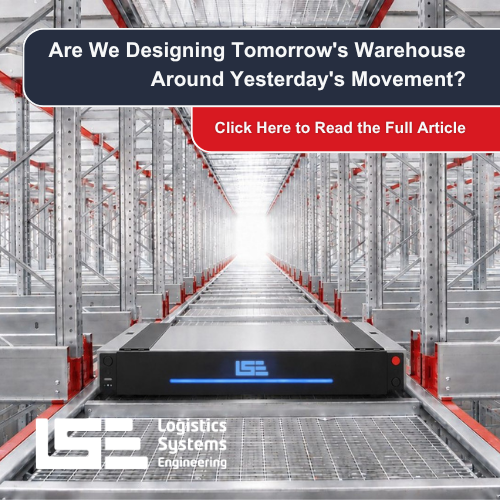
LSE's Multi-Directional Shuttle Range introduces a Different Approach to Automated High-Density Storage, allowing Pallet Movement to Take Place within the Storage System itself rather than Relying Exclusively on Conventional Material-Handling Routes.
The Latest Addition to LSE's Multi-Directional Shuttle Range is our 6-Way Shuttle.
Designed to Move in Multiple Directions within an Automated Storage and Retrieval System, the Technology Opens New Possibilities for High-Density Storage, Intelligent Pallet Movement, Operational Flexibility, Scalability and System Redundancy.
But the Significance isn't simply that the Shuttle can Move Differently. It's what that Movement can Allow the Warehouse to do Differently.
Experience the Launch of LSE's 6-Way Shuttle — Live
At Propak Cape 2026, LSE will Officially Introduce our 6-Way Shuttle, Part of our Multi-Directional Shuttle Range, Operating Live throughout the Exhibition.
Visitors will have the Opportunity to see the Shuttle Move, Change Direction and Handle Pallets Live, while Speaking Directly with the LSE Team about What Technologies like this could mean for the Future of Warehouse Design and Automation.
If you're Planning a New Facility, Expanding an Existing Operation or Questioning whether your Current Warehouse is Really Working as hard as it could, Bring us the Problem.
Bring us your Warehouse Layout. Bring us your Capacity Challenge. Bring us the Operation you're Planning to Build Next.
Before you Automatically Draw the Aisles, Choose the Equipment or Decide how your Pallets are Going to Move...Let's Talk about Whether There Might Be Another Direction.
📍 ProPak Cape 2026
📅 27–29 October 2026
🏢 CTICC, Cape Town
📌 LSE — Stand D64, Hall 1
Experience the Launch of LSE's 6-Way Shuttle — Live.
Tickets for Propak Cape 2026 Visitor Registration in Cape Town from Tixsa
The Future Doesn't Move Forward. It Moves in
Every Direction